
Home / Wood guide / Zebrawood
Wood 16 of 21
Zebrawood
Also called zebrano
Bold stripes that mimic the pattern of a zebra, hence the name.
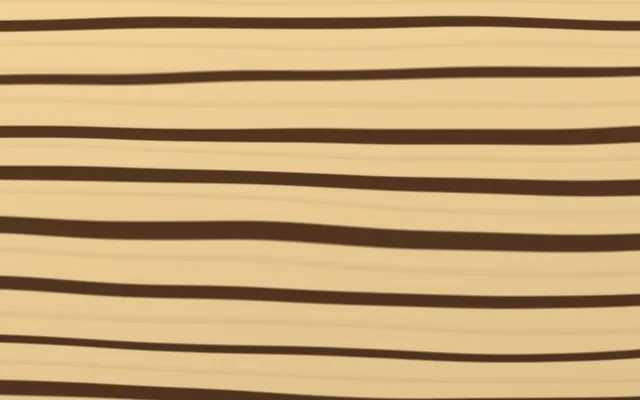
Color over time
Approximate, in a normally lit room. Illustrated grain; real boards vary.
- Hardness
- 1,830 Very hardHigher number means harder to dent. About the Janka test
- Weight
- Heavy
- Cost of the wood
- $$$Premium, per board foot
- Grows in
- West Africa
What it looks like
A light cream to golden background with dark brown to black stripes. Some boards have narrow, even stripes; others have wide, wavy ones. The grain is coarse, with a nice sheen.
How it changes over time
The light background warms to a golden tan, which softens the contrast a little. The stripes stay bold.
Shimmer
Some shimmer between the stripes. The “drama” is the pattern, not the light.
Smell
Fresh-cut zebrawood has a strong, sour smell that goes away once it’s dry and finished.
With a natural wax finish
Bold, matte stripes with a natural feel. A clear wax keeps the dark stripes clean.
With a semi-gloss lacquer finish
The background turns golden and the stripes nearly black, with a soft shimmer between them.
Safe for food?
Looks great with
- Wenge: the classic stripes-and-black pairing
- Hard Maple: a clean, light setting for the stripes
- American Black Walnut: a brown setting; the contrast softens over time
- Peruvian Walnut: a darker, plain partner
- Padauk: gold stripes and red; loud, but it works
Not the best match
- Macassar Ebony: two striped woods compete for attention