Home / Wood guide / Bubinga
Wood 15 of 21
Bubinga
A heavy, dramatic pinkish-red wood with dark veins, famous for striking slab tables and wild patterns.
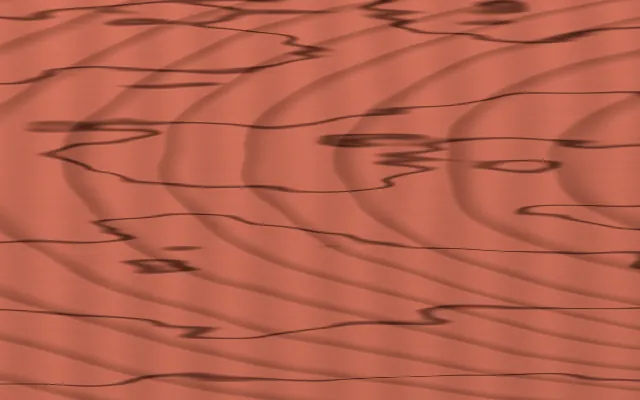
Color over time
Approximate, in a normally lit room. Illustrated grain; real boards vary.
- Hardness
- 2,410 Extremely hardHigher number means harder to dent. About the Janka test
- Weight
- Heavy
- Cost of the wood
- $$$Premium, per board foot
- Grows in
- Equatorial Africa
What it looks like
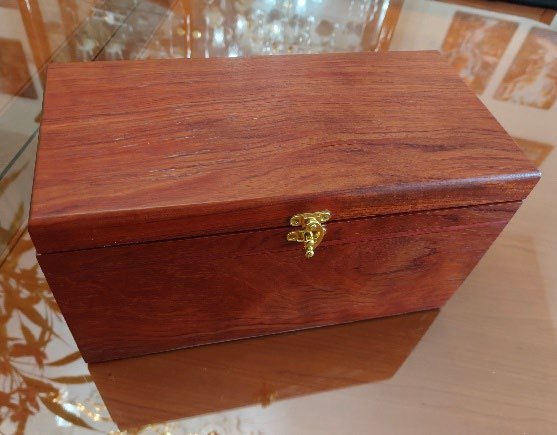
Pinkish-red to deep reddish-brown with darker purple or black veins. Smooth and dense. Many boards have spectacular patterns: rippling “waterfall,” bubbly, flamed or quilted.
How it changes over time
Over a few years it deepens from pinkish-red to a richer burgundy-brown, faster in the sun. The dark veins stay dark.
Shimmer
Bubinga is one of the most three-dimensional woods anywhere.
Smell
Little to none once finished.
With a natural wax finish
So dense it polishes to a satin sheen with wax alone. The color deepens slightly and the pattern stays soft.
With a semi-gloss lacquer finish
The patterns look liquid and three-dimensional, and the color turns a rich burgundy.
Safe for food?
Looks great with
- Hard Maple: a light frame for a dramatic top
- Curly / Quilted Maple: two shimmering woods
- Wenge: burgundy and black
- Macassar Ebony: black trim
- American Black Walnut: a warm, dark pairing
- White Ash: blond against burgundy