
Home / Wood guide / Wenge
Wood 17 of 21
Wenge
Pronounced “when-gay”
One of the darkest natural woods you can get without dye. It’s very hard, and its natural oils make it highly resistant to rot, fungal decay and wood-boring insects like termites.
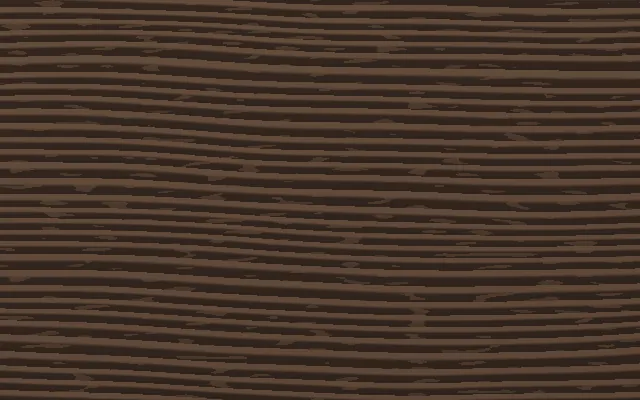
Color over time
Approximate, in a normally lit room. Illustrated grain; real boards vary.
- Hardness
- 1,930 Very hardHigher number means harder to dent. About the Janka test
- Weight
- Heavy
- Cost of the wood
- $$$Premium, per board foot
- Grows in
- Central Africa (Congo basin)
What it looks like
Dark brown with fine, nearly black stripes, like the pattern of a bird’s wing on some boards, thin pinstripes on others. The grain is coarse and textured. Unfinished, it looks dull grayish-brown. The finish transforms it.
How it changes over time
Unlike most dark woods, it can get a little lighter and grayer in strong sun. Indoors it stays very stable; the finish matters more than time.
Shimmer
Essentially none. Its appeal is contrast and texture.
Smell
None once finished.
With a natural wax finish
Dry and matte. With an oil under the wax, it becomes a near-black with faint brown stripes.
With a semi-gloss lacquer finish
Goes nearly black, with the brown stripes glowing in the light. The grain texture usually stays visible.
Safe for food?
Splinter risk
Wenge is brittle and splinters easily, and the splinters can be tiny, sometimes barely visible. On a food piece, small fragments can break off and land on the food without anyone noticing. Its natural oils are irritants, so swallowing a splinter or getting pricked by one can cause bad skin or digestive-tract inflammation. Raw wenge takes real care to work with and to handle.
Looks great with
- Hard Maple: the biggest contrast; both colors stay put
- Zebrawood: the classic stripe pairing
- Padauk: red and black
- White Ash: blond and black
- Sapele: copper and black
- Curly / Quilted Maple: a black frame for shimmering maple