
Home / Wood guide / Sapele
Wood 11 of 21
Sapele
A harder cousin of sipo, famous for its shimmering ribbon stripe.
Color over time
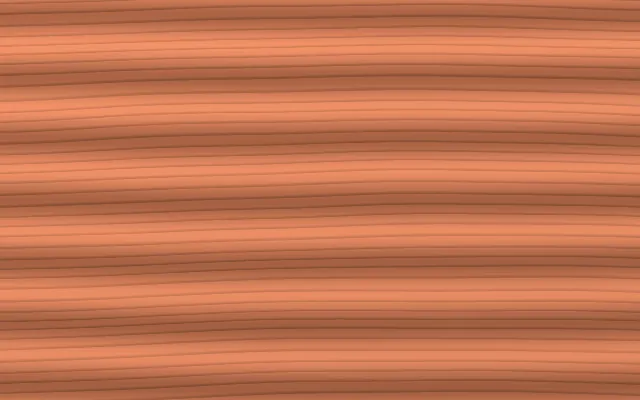
Approximate, in a normally lit room. Illustrated grain; real boards vary.
- Hardness
- 1,360 HardHigher number means harder to dent. About the Janka test
- Weight
- Medium-heavy
- Cost of the wood
- $$Moderate, per board foot
- Grows in
- Tropical West and Central Africa
What it looks like
Golden to reddish-brown. Many boards have the famous “ribbon stripe”: long bands that flash light and dark. Smooth, fine grain. Some special boards have a bubbly or quilted pattern.
How it changes over time
Darkens to a deep red-brown or copper within 1 to 2 years, faster in the sun. The stripes stay.
Shimmer
On striped boards it’s spectacular. The bands flip light and dark as you walk by. Plainer boards have a softer glow.
Smell
A spicy, cedar-like smell when cut; none once finished.
With a natural wax finish
The stripes show, but softly. A warm, matte copper look that darkens over time.
With a semi-gloss lacquer finish
This is where sapele shines. The stripes come alive and shimmer, and the color deepens right away to a rich red-brown. The bubbles look almost liquid under the finish.
Safe for food?
Looks great with
- Hard Maple: copper on white; the contrast grows as sapele darkens
- Curly / Quilted Maple: two shimmering woods, one as the frame
- Wenge: a modern furniture favorite
- Macassar Ebony: black trim on copper
- Peruvian Walnut: a rich, dark pairing
- White Ash: blond against copper